


Can Radial Fans Be Used in Industrial Ventilation Systems?
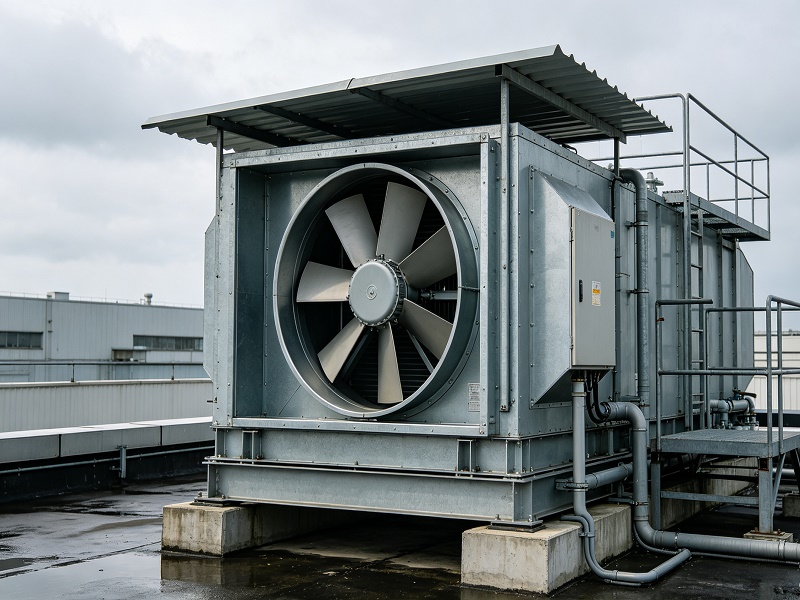
Introduction
If you're sourcing ventilation solutions for a factory, warehouse, air handling unit, or large-scale HVAC project, you've probably come across radial fans and asked a straightforward question: are they actually up to the demands of industrial ventilation?
The answer is a clear yes. Unlike conventional axial fans that lose performance when airflow meets resistance from ductwork or filtration equipment, radial fans are specifically engineered to push air powerfully through complex systems without stalling. They combine high static pressure capability, compact installation, and long service life in a way no other fan type fully replicates.
In this guide, we cover everything you need to make a confident decision: how these fans work, where they perform best, how to choose the right model, and how Belmont's radial fan lineup is helping facilities worldwide run cleaner, safer, and more efficiently.
Key Takeaways
Radial fans generate high static pressure, making them ideal for industrial ventilation systems with ductwork, filters, and resistance-heavy airflow paths.
They consistently outperform axial fans in enclosed environments such as air handling units, cleanrooms, and manufacturing floors.
EC motor models offer variable speed control and meaningful energy savings compared to fixed-speed alternatives.
Proper selection requires matching airflow volume (m³/h), static pressure (Pa), motor type, and IP rating to your system.
Belmont's radial plug fan series ranges from 133mm to 630mm, delivers up to 24,000 m³/h, and is rated for over 50,000 hours of service.
1. What Are Radial Fans — and How Do They Work?
A radial fan (also called a centrifugal plug fan) draws air into the center of a rotating impeller and expels it outward at a 90-degree angle. This radial discharge mechanism is what gives them their defining strength: the ability to generate high static pressure while maintaining consistent, powerful airflow.
In a plug fan configuration — the most widely used format in industrial HVAC — the impeller mounts directly inside an air handling unit or duct box without a scroll casing. This compact design saves installation space without sacrificing output, which is why radial fans have become the go-to standard inside modern AHUs and ventilation cabinets.
The core distinction from axial fans is direction. Axial fans move air parallel to their rotation axis, which works well in open, unobstructed environments. Radial fans redirect airflow outward, building the pressure needed to move air through real-world industrial systems — duct bends, filters, heat exchangers, and all.
2. Why Industrial Ventilation Systems Rely on These Fans
Industrial ventilation is never about simply moving air from point A to point B. Real systems include multi-stage filters, duct runs, heat exchangers, and control dampers — all of which create resistance measured in Pascals (Pa). A fan that performs well in open air can stall in these conditions.
This is where radial fans deliver most clearly:
High Static Pressure PerformanceThey maintain stable, powerful airflow even when system resistance is significant — handling 200 Pa up to 1,500 Pa and beyond depending on the model. This makes them reliable for complex, real-world duct systems.
Continuous-Duty DurabilityIndustrial facilities operate around the clock. Built with quality impellers and reinforced motor housings, Belmont's radial fans are rated for over 50,000 hours of reliable operation — equivalent to more than five years of 24/7 running.
Energy Efficiency Through Smart ControlEC motor versions adjust speed automatically to match actual airflow demand in real time, consuming only the energy needed rather than running at full power continuously.
Compatibility with Harsh EnvironmentsFrom dusty production floors to humidity-heavy refrigeration rooms, models with IP54-rated protection operate reliably in the conditions where industrial ventilation is needed most.
3. Key Industrial Applications
The combination of pressure performance and space-efficient design makes radial fans suitable across a broad range of industrial and commercial ventilation scenarios:
Air Handling Units (AHUs)Inside AHUs, these fans drive airflow through filters, heating/cooling coils, and distribution ductwork — the backbone of large-scale industrial and commercial building ventilation.
Cleanrooms and LaboratoriesPharmaceutical plants, semiconductor fabs, and research facilities need contamination-controlled, stable airflow at all times. Radial fans provide the precise, high-pressure circulation these environments depend on.
Manufacturing Factories and WorkshopsWelding bays, spray booths, foundries, and processing lines generate heat, fumes, and particulates continuously. These fans handle such conditions effectively, protecting workers and equipment alike.
Data CentersServer rooms concentrate significant heat loads in compact spaces. Targeted, high-pressure airflow from radial fans maintains safe operating temperatures for sensitive electronic infrastructure.
Commercial HVAC SystemsHospitals, hotels, office towers, and shopping centers depend on reliable air distribution through long, branching duct networks — exactly the application profile where these fans shine.
Refrigeration and Cold StorageCold chain operations require consistent airflow for temperature uniformity. Radial fans sustain stable pressure output even at low operating temperatures.
4. Radial Fans vs. Other Fan Types: At-a-Glance Comparison
| Feature | Radial Fans (Plug Fan) | Axial Fans | Forward Curved Centrifugal |
|---|---|---|---|
| Static Pressure Capability | ★★★★★ High | ★★ Low | ★★★ Medium |
| Performance in Ductwork | Excellent | Poor | Moderate |
| Energy Efficiency (EC) | Excellent | Good | Good |
| Noise Level | Low–Medium | Medium | Medium |
| Installation Footprint | Compact | Compact | Larger |
| Dusty / Harsh Environments | Excellent | Moderate | Moderate |
| Typical Applications | AHUs, Cleanrooms, Factories | Open ventilation, Cooling towers | Low-resistance HVAC |
For any industrial ventilation setup involving ductwork, filtration, or enclosed spaces, radial fans are the consistently stronger performer.
5. How to Choose the Right Model for Your System
Selecting the right radial fan for industrial ventilation comes down to four engineering criteria:
Step 1 — Define Airflow Volume (m³/h)Calculate how much air your system must move per hour, based on room volume and required air changes per hour (ACH). Industrial processing environments typically need 10–20 ACH; cleanrooms often require significantly more.
Step 2 — Assess Static Pressure (Pa)Estimate total system resistance — all duct runs, filters, coils, and dampers combined. Systems exceeding 200 Pa resistance are ideal candidates for radial fans.
Step 3 — Select Motor Type
EC motors — best for energy efficiency, variable speed via PWM or 0–10V control, and compliance with ERP2020 standards. They consume less power under partial load conditions and are ideal for intelligent building systems.
AC motors — reliable, cost-effective for fixed-speed applications on standard single-phase or three-phase power infrastructure.
Step 4 — Confirm Environmental RatingsMatch IP rating, operating temperature range, and material construction to your site conditions. IP54 is the baseline for most industrial applications.
6. Belmont Radial Plug Fan Series: Built for Industrial Demands
Established in 2000 and headquartered in Changzhou, China, Belmonthas spent over two decades engineering high-performance fans for industrial, commercial, and OEM applications worldwide. Our radial plug fan range is designed specifically for demanding ventilation requirements:
Fan sizes from 133mm to 630mm
Maximum airflow up to 24,000 m³/h
EC and AC motor options
IP54 protection as standard
Quiet operation from 60 dBA
Over 50,000 hours rated service life
Full OEM/ODM customization available
Representative Specifications
| Size (mm) | Motor | Power (W) | Max Airflow (m³/h) | Noise (dBA) | Voltage |
|---|---|---|---|---|---|
| 220 | EC | 180 | 1,200 | 68 | 230V / 1P |
| 310 | EC | 1,650 | 5,800 | 75 | 400V / 3P |
| 400 | EC | 1,580 | 7,700 | 70 | 400V / 3P |
| 450 | EC | 4,430 | 14,700 | 77 | 400V / 3P |
| 560 | EC | 3,750 | 20,000 | 77 | 400V / 3P |
| 630 | EC | 6,850 | 24,000 | 82 | 400V / 3P |
From compact 220mm units for tight AHU spaces to 630mm models handling 24,000 m³/h in large industrial facilities, the Belmont lineup scales to match any requirement. All models support custom mounting, and our engineering team works directly with system integrators and HVAC equipment manufacturers.
Frequently Asked Questions
Q1: Can radial fans replace axial fans in industrial ventilation?In most duct-based or enclosed systems, yes. Where airflow must overcome resistance from filters, ductwork, or process equipment, radial fans significantly outperform axial fans. Axial fans remain better suited for open, low-resistance environments.
Q2: What is the difference between a radial fan and a centrifugal fan?A radial fan is a type of centrifugal fan. The "radial plug fan" label specifically refers to the plug configuration — the impeller is installed without a scroll casing, allowing direct use inside AHUs and duct boxes.
Q3: How energy efficient are radial fans?EC motor versions are highly efficient. They modulate speed to match actual demand, avoiding unnecessary energy consumption at partial loads. This makes them well-suited for variable-demand industrial systems.
Q4: What static pressure range can these fans handle?Belmont's models perform reliably from several hundred Pa up to well over 1,000 Pa — covering the vast majority of industrial AHU and duct ventilation applications.
Q5: How long do Belmont radial fans last?With regular maintenance, Belmont's radial plug fans are rated for over 50,000 hours — equivalent to more than five years of continuous 24/7 operation.
Q6: Can these fans operate in dusty or humid industrial environments?Yes. With IP54 protection as standard, they resist dust ingress and moisture in typical industrial settings. Higher IP configurations are available for particularly demanding environments.
Q7: What sizes and airflow ranges does Belmont offer?The range covers 133mm to 630mm impellers, with airflow from 380 m³/h to 24,000 m³/h — suitable from compact fan coil units to large industrial ventilation systems.
Q8: Does Belmont support OEM and custom orders?Yes. Belmont provides full OEM and ODM services including custom fan sizes, motor configurations, mounting options, and voltage specifications for industrial equipment manufacturers.
Ready to Upgrade Your Industrial Ventilation?
When your ventilation system demands reliable performance — under pressure, in harsh conditions, and around the clock — radial fans are the proven answer. With over 20 years of manufacturing experience, Belmont engineers the fans that industrial contractors, HVAC builders, and OEM partners worldwide rely on.
Contact Belmont today for selection support, custom configurations, and competitive pricing.


