


How Axial HVAC Fans Are Used in Different Industries
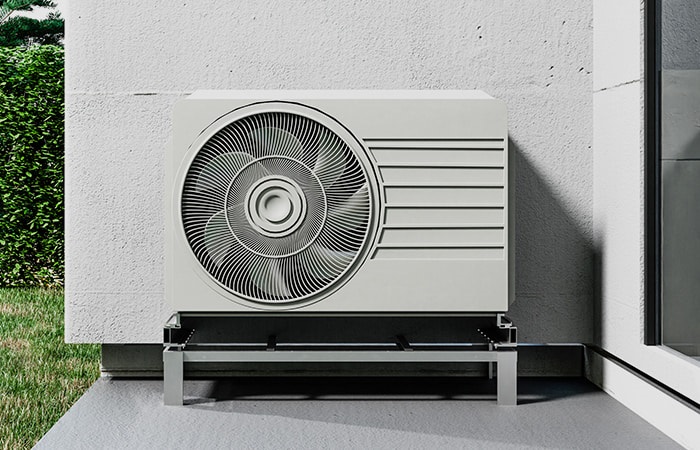
When it comes to moving large volumes of air efficiently in heating, ventilation, and air conditioning systems, axial HVAC fans are the unsung heroes behind countless industrial and commercial operations. Unlike centrifugal fans that change airflow direction, axial fans move air along the axis of the blades—like a propeller—delivering high flow rates at relatively low pressure. This unique characteristic makes them indispensable for applications where quiet, energy‑efficient, and space‑saving ventilation is required.
In this comprehensive guide, we explore exactly how axial HVAC fans are used in different industries, from commercial buildings to cold storage, data centers, and cleanrooms. Whether you are an engineer specifying equipment, a facility manager optimizing energy use, or a distributor looking for reliable fan solutions, this article will give you actionable insights backed by real‑world practices.
Key Takeaways
Axial HVAC fans excel in high‑airflow, low‑to‑medium static pressure applications, making them ideal for ventilation, condenser cooling, and general air movement.
Different industries require tailored fan designs: corrosion‑resistant materials for refrigeration, low‑noise profiles for office buildings, and high‑reliability EC motors for data centers.
EC (electronically commutated) axial fans now dominate the market due to their 30–50% energy savings compared to traditional AC fans.
Proper selection based on airflow (CFM/m³/h), static pressure, ambient temperature, and noise constraints is critical for long‑term performance.
Working with an experienced manufacturer like Belmont(24+ years, CE & UL certified) ensures custom solutions that meet exact industry requirements.
1. Commercial Building HVAC Systems
Commercial buildings—offices, shopping malls, hotels, and hospitals—depend on axial HVAC fans for fresh air intake, exhaust, and condenser cooling in rooftop units (RTUs) and air‑handling units (AHUs).
How They Are Used
Fresh Air Supply: Axial fans draw outdoor air into AHUs, mixing it with return air to maintain indoor air quality (IAQ).
Exhaust Ventilation: Restrooms, kitchens, and parking garages use axial fans to remove stale air, odors, and contaminants.
Condenser Cooling: In split systems and chillers, axial fans pull ambient air across condenser coils to reject heat.
Why Axial Fans Are Preferred
| Requirement | Axial Fan Advantage |
|---|---|
| High airflow at low static pressure | Ideal for ductless or short‑duct applications |
| Quiet operation | Modern blade designs and EC motors reduce noise to ≤55 dB(A) |
| Space efficiency | Slim profile fits inside compact rooftop units |
| Energy compliance | Meets ASHRAE 90.1 and local energy codes |
For example, a typical office building uses dozens of 450 mm to 710 mm axial HVAC fans in its VRF condenser units. Belmont offers models like the BEFEC102‑A450‑012 (450 mm, 5637 m³/h) with carbon steel blades and EC motors, delivering both low noise and high efficiency.
2. Refrigeration & Cold Storage Facilities
Cold storage warehouses, walk‑in coolers, and blast freezers rely on axial HVAC fans to circulate cold air evenly and maintain precise temperatures.
How They Are Used
Evaporator Fan Motors: Axial fans mounted inside evaporator units force air over cooling coils, then distribute chilled air throughout the storage area.
Condenser Cooling: Outdoor condensers in refrigeration racks use axial fans to dissipate heat, especially in ammonia‑based systems.
Defrost Cycle Support: Some axial fans are designed to reverse airflow temporarily to aid defrosting.
Critical Design Considerations
| Factor | Axial Fan Solution |
|---|---|
| Low‑temperature operation (‑40°C) | Lubrication‑free bearings, sealed motors |
| Corrosion resistance | Stainless steel or coated aluminum blades |
| Frost buildup prevention | Heated hub option or intermittent operation |
| Energy savings | EC motors reduce running costs by up to 50% |
A cold‑storage operator in Europe replaced 20 old AC axial fans with Belmont EC axial fans (model BEFEC137‑A710‑KA1, 710 mm, 14730 m³/h) and reported a 35% drop in electricity bills while maintaining ±0.5°C temperature uniformity.
3. Data Center Cooling
Modern data centers generate enormous heat loads. Axial HVAC fans are the backbone of server‑room cooling, either in computer room air handlers (CRAHs) or direct‑expansion (DX) units.
How They Are Used
CRAH Units: Large axial fans push chilled air through a raised floor or overhead ducts to server racks.
Row‑Based Cooling: Smaller axial fans in in‑row coolers target hot spots directly.
Condenser Units: Roof‑mounted dry coolers use axial fans to reject heat from the chilled water loop.
Performance Metrics That Matter
| Metric | Typical Range | Why Important |
|---|---|---|
| Airflow per fan | 5,000 – 36,000 m³/h | Matches rack heat load |
| Static pressure | 50 – 300 Pa | Overcomes filter and coil resistance |
| Noise level | <65 dB(A) at 10 m | Required for office‑adjacent data halls |
| Redundancy | N+1 configuration | Ensures uptime during fan failure |
Because data centers run 24/7, energy efficiency is paramount. Belmont’s EC axial fans (e.g., BEFEC180‑A910‑C05, 910 mm, 36,000 m³/h) incorporate aerodynamic impellers and integrated controllers that modulate speed based on temperature demand, cutting energy use by up to 45% compared to fixed‑speed AC fans.
4. Cleanrooms & Controlled Environments
Pharmaceutical labs, semiconductor fabs, and hospital operating rooms require ultra‑clean air. Axial HVAC fans are used in HEPA‑filtered fan filter units (FFUs) and mini‑environments.
How They Are Used
Fan Filter Units (FFUs): Small axial fans (200–400 mm) push air through HEPA filters at a uniform velocity (0.45 m/s typical).
Make‑Up Air Units: Larger axial fans bring conditioned outside air into the cleanroom to maintain positive pressure.
Exhaust Systems: Hazardous exhaust streams are handled by spark‑proof axial fans with TEFC motors.
Cleanroom Fan Requirements
| Requirement | Axial Fan Feature |
|---|---|
| Low particle generation | Smooth, non‑shedding surfaces; no belts |
| Precise airflow control | 0–10 V DC input or Modbus communication |
| Easy cleaning | Removable guard and washable blades |
| Compliance | ISO Class 5 (Class 100) capable |
Belmont offers a 225 mm EC axial fan (BEFEC102‑B250‑030) specifically designed for cleanroom FFUs, with a compact footprint and variable speed that maintains constant airflow despite filter loading.
5. Industrial Ventilation & Manufacturing Plants
Factories, warehouses, and assembly lines often suffer from heat, fumes, dust, and humidity. Axial HVAC fans provide general ventilation and spot cooling.
How They Are Used
Roof Exhausters: Belt‑driven or direct‑drive axial fans remove hot air and contaminants from the building envelope.
Wall‑Mounted Circulators: Large diameter axial fans (up to 1200 mm) create air movement over workers and machinery.
Process Cooling: In foundries or plastic molding, axial fans blow air onto molds or finished parts to accelerate cooling.
Selection Table for Industrial Axial Fans
| Application | Recommended Fan Type | Key Parameter |
|---|---|---|
| General warehouse ventilation | Low‑pressure axial fan | 10,000–30,000 m³/h @ 50–100 Pa |
| Welding fume exhaust | High‑temperature axial fan (up to 150°C) | Spark‑proof motor, stainless steel |
| Paint booth supply | Explosion‑proof axial fan | ATEX/IECEx certified |
| Greenhouse circulation | Corrosion‑resistant axial fan | IP55 motor, coated blades |
Belmont provides customizable axial fans for harsh environments, with options for special coatings, high‑temperature windings, and explosion‑proof enclosures—all backed by 24 years of OEM/ODM expertise.
6. Cooling Towers & Heat Rejection Equipment
Cooling towers reject heat from chillers, compressors, and industrial processes. While many towers use axial fans, the design must handle moisture and varying loads.
How They Are Used
Induced Draft Towers: Axial fans are located at the top, pulling air upward through falling water.
Forced Draft Towers: Fans are at the bottom, pushing air upward.
Dry Coolers / Radiators: Axial fans blow ambient air across finned tubes containing hot fluid.
Axial Fan Features for Cooling Towers
| Challenge | Axial Fan Solution |
|---|---|
| Moisture ingress | IP56 motor, encapsulated electronics |
| Corrosive environment | Aluminum or FRP blades, stainless steel hardware |
| Variable heat load | EC motor with PID controller adjusts speed |
| Low noise regulations | Wide‑chord, low‑tip‑speed blades |
For example, a 710 mm Belmont EC axial fan (BEFEC137‑A710‑C01) used in a cooling tower delivers 16,650 m³/h at only 68 dB(A)—meeting strict European noise limits while saving 40% energy versus an AC counterpart.
7. Agriculture & Greenhouses
Controlled environment agriculture (CEA) relies on axial HVAC fans for temperature, humidity, and CO₂ distribution.
How They Are Used
Horizontal Airflow (HAF) Fans: Long‑throw axial fans hang from greenhouse trusses to eliminate stagnant air pockets.
Exhaust Fans: Large shutter‑mounted axial fans exchange indoor air with outside air for cooling.
Pad & Fan Systems: Axial fans draw air through evaporative cooling pads, lowering temperature by 5–10°C.
Key Benefits in Agriculture
Uniform microclimate reduces disease and improves yield.
EC motors allow precise speed control based on sensor feedback.
Lightweight construction simplifies mounting on aluminum frames.
Belmont supplies agricultural axial fans with weather‑resistant housings and energy‑efficient EC drives, helping growers cut operational costs while maintaining optimal crop conditions.
FAQ: Common Questions About Axial HVAC Fans in Industry
Q1: What is the difference between axial HVAC fans and centrifugal fans?
A: Axial fans move air straight through the impeller, producing high airflow at low static pressure. Centrifugal fans change airflow direction 90°, generating higher pressure but lower flow. For ducted systems with long runs, centrifugal is better; for open ventilation or short ducts, axial is more efficient.
Q2: Can axial HVAC fans be used in high‑static‑pressure applications?
A: Standard axial fans are not suitable for static pressures above 500 Pa. However, mixed‑flow or vane‑axial designs can handle up to 1500 Pa. Always check the fan curve against system resistance.
Q3: How do I choose the right size axial fan for my industry?
A: Calculate required airflow (m³/h) based on heat load or air changes per hour. Then match with a fan whose operating point falls within its efficient zone. Consider noise, ambient temperature, and available voltage. Belmont’s technical team offers free selection guidance.
Q4: Are EC axial fans worth the extra upfront cost?
A: Yes. EC motors typically pay back within 12–18 months through 30–50% energy savings, longer lifespan, and reduced maintenance. Many utilities also offer rebates for EC upgrades.
Q5: How often should axial HVAC fans be maintained?
A: In clean environments, inspect every 6 months; in dusty or corrosive settings, monthly. Check blade balance, bearing condition, and electrical connections. Belmont fans feature sealed bearings rated for 60,000+ hours, minimizing service intervals.
Q6: Can I get custom axial fans for a unique application?
A: Absolutely. As a leading OEM/ODM manufacturer, Belmont provides custom impeller diameters, motor voltages, blade materials, and protective coatings. We have delivered over 6,000 customized solutions globally.
Q7: Do axial fans work in very cold climates?
A: Yes, with proper specifications. Use low‑temperature grease, heated hubs if frost may form, and ensure the motor’s insulation class matches ambient lows. Belmont’s refrigeration‑grade axial fans operate reliably down to -40°C.
Q8: What certifications should I look for?
A: CE, UL, ISO 9001, and RoHS are standard. For hazardous areas, ATEX or IECEx certification is required. Belmont holds all major certifications, giving you confidence in compliance and safety.
Why Choose Belmont for Your Axial HVAC Fan Needs?
With over 24 years of specialization in industrial axial and centrifugal fans, Belmont understands that every industry has unique airflow challenges. Our axial HVAC fans are engineered with:
EC motor technology for unmatched energy efficiency and silent operation.
Robust construction using carbon steel, stainless steel, or aluminum blades.
Full customization – from 133 mm to 1220 mm diameters, special coatings, and smart controls.
Global certifications (CE, UL, ISO 9001) ensuring worry‑free integration anywhere.
End‑to‑end support – selection, installation, and after‑sales service from our Changzhou headquarters.
Whether you are upgrading a data center, designing a cold storage facility, or retrofitting a commercial HVAC system, Belmont delivers the right axial fan solution—on time, within budget, and built to last.


