


How Long Is the Actual Service Life of an Industrial-Grade AC Axial Cooling Fan?
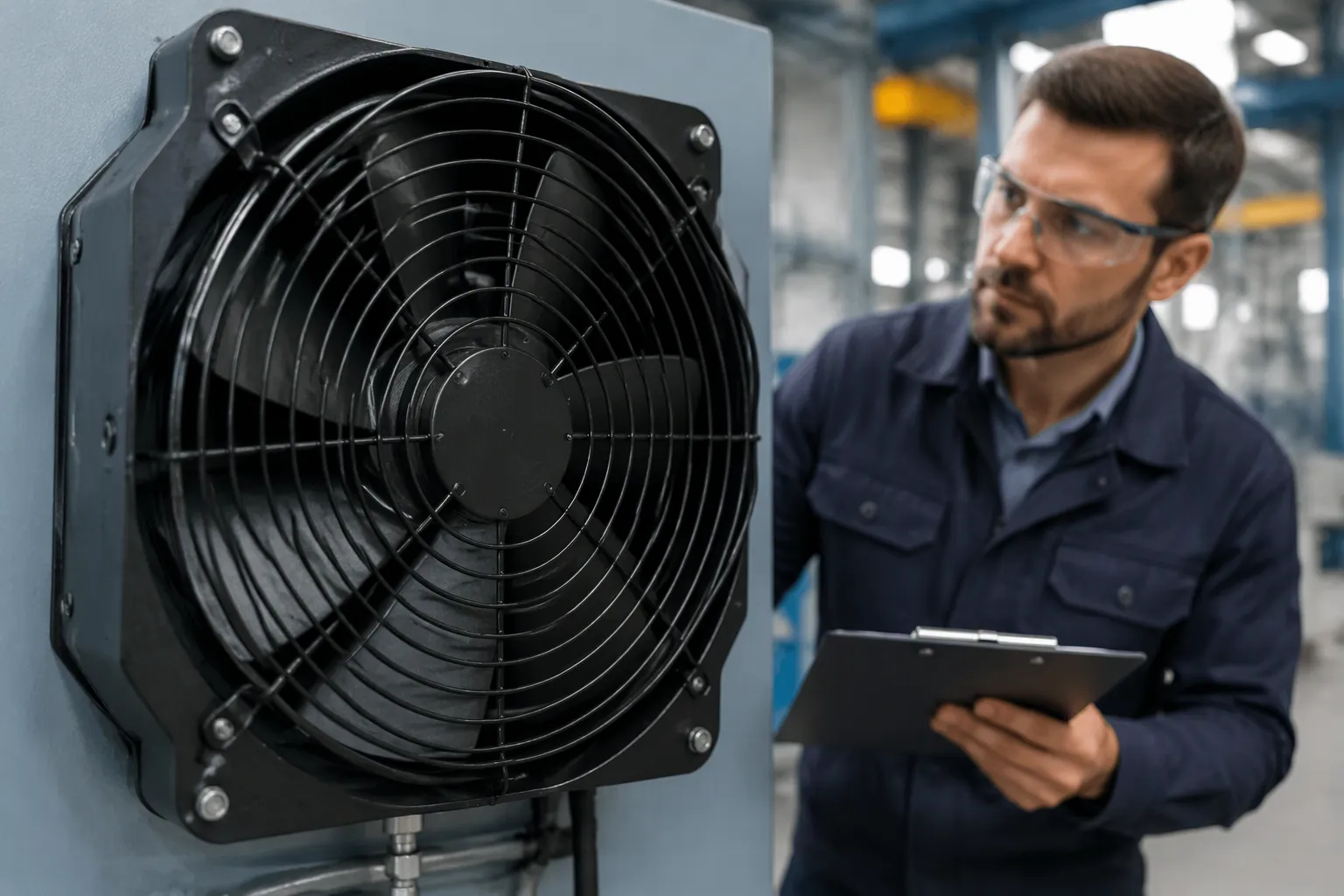
An industrial-grade Axial Cooling Fan usually lasts 25,000 to 60,000 hours at 25°C. The bearing type decides that number. In real setups, the same fan often runs for about 8 to 15 years, depending on how hard it works and where it is installed.
Three parts shape how long the fan lasts: the IC, the bearing, and the blades. The bearing is the weak point. It wears out first and ends the fan's working life.
Published MTBF numbers should be viewed with doubt. Real use conditions matter as much as datasheets.
This article compares bearing types on lifetime, noise, cost, and fit. It also explains how to match a fan to equipment and export-market requirements.
Key Takeaways
The type of bearing decides how long an industrial axial cooling fan will last.
Sleeve bearings are cheap and quiet, but they last about 20,000 hours and work well for light duty.
Ball bearings are a good middle choice. They last about 40,000 hours in general industrial use.
Z-axis bearings last the longest, up to 180,000 hours, for systems that need to be very reliable.
Pick the fan that fits your use, and check for export papers like CE and UL before you buy.
What Sets Axial Cooling Fan Service Life?
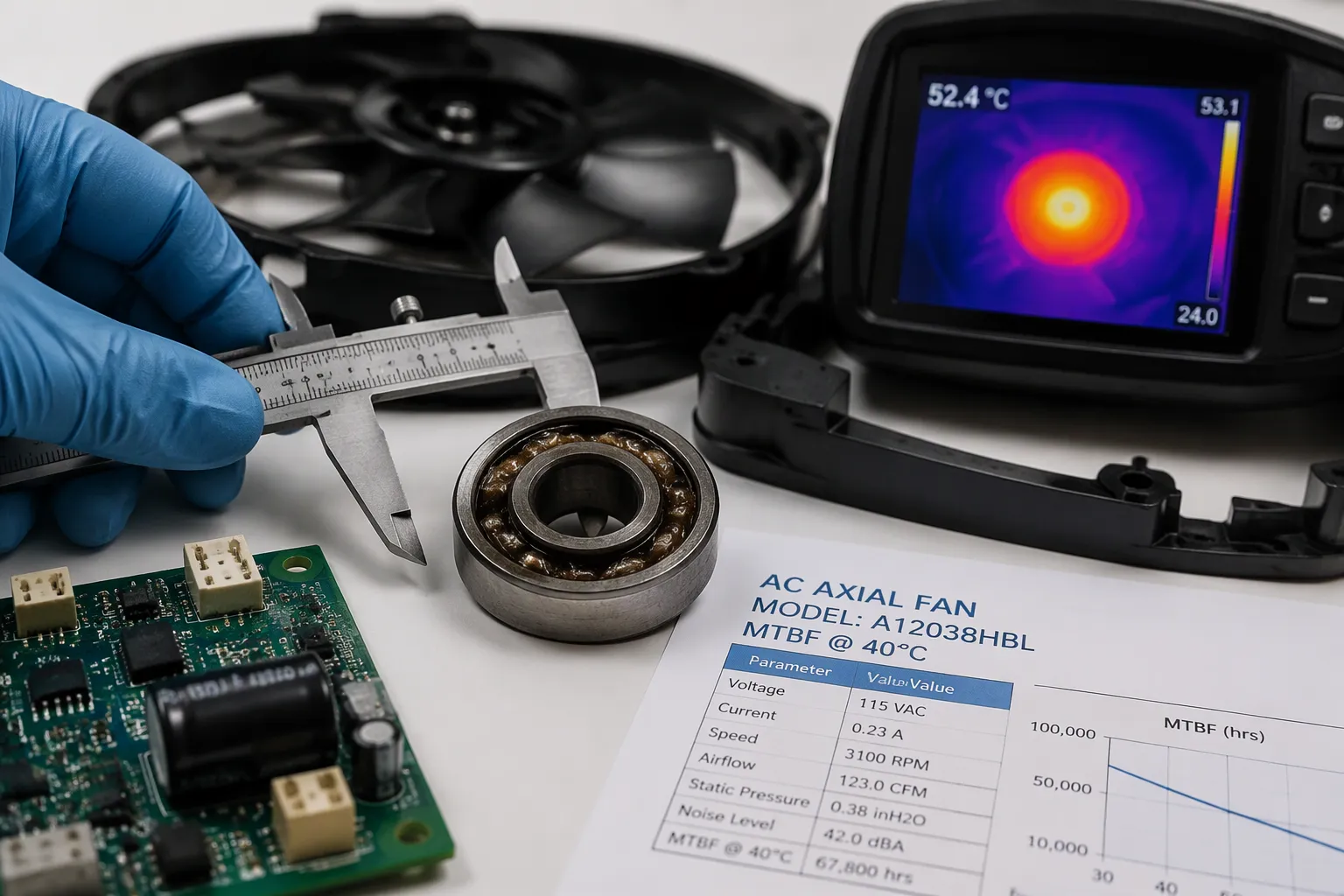
Key Components: IC, Bearing, Blades
Three parts do the main work inside an industrial axial fan. The integrated circuit (IC) controls the motor. It manages speed, protection logic, and, in EC designs, the electronics that turn incoming power into efficient motor drive. The blades move the air. Their shape, balance, and material set airflow output and vibration levels. The bearing holds the rotating shaft. It carries the radial and axial loads that the impeller makes with every turn.
Each part has its own job, yet they do not wear out at the same speed. The IC usually fails from heat or voltage stress, and a well-built board can outlast the mechanical parts. The blades seldom fail by themselves. They wear from dust buildup, imbalance, or fatigue, and these problems often come back to bearing play. The bearing sits at the center of the wear chain. It takes constant friction, lubricant breakdown, and load cycles. Once the bearing loses clearance or seizes, the fan stops, even if the IC and blades are still fine.
Why the Bearing Decides
The bearing sets the top limit on service life for most industrial fans. Lubricant breaks down over time, and heat speeds up that process. A fan in a hot enclosure wears its bearing faster than one in a cool, steady place. Mounting position matters too. Shaft-up or shaft-down setups change how gravity loads the bearing. Load and duty cycle finish the picture. A fan that runs nonstop at full speed builds up wear far faster than one that cycles on and off.
Published MTBF figures need caution. Mean time between failures comes from controlled test conditions, often at moderate temperatures and steady voltage. Real setups rarely match those conditions. A datasheet number describes a lab benchmark, not a promise for a specific machine.
Field data shows a wide spread. Light-duty fans in clean, cool places often reach about 20,000 hours. Medium light-industrial units usually run around 40,000 hours. Long-life designs built for telecom and server racks can stretch to roughly 180,000 hours. For most industrial axial cooling fan uses, the practical figure lands between 8 and 15 years of service. That range reflects average duty cycles and typical plant environments, not best-case lab results.
Buyers should treat any single lifetime number as a starting point. The real answer depends on ambient temperature, mounting orientation, load profile, and how often the fan runs. A fan rated for 60,000 hours at 25°C will fall short in a 50°C cabinet. On the other hand, a modest fan in a cool, lightly loaded system can beat its rated life. Matching the bearing to the actual operating conditions matters more than chasing the highest datasheet figure.
Bearing Types Compared
Lifetime, Noise, Cost, Fit
Each bearing family covers its own range of lifetime, noise, and cost. The table below sums up where each type usually stands at 25°C.
Bearing type | Lifetime at 25°C | Noise | Unit price | Recommended use |
|---|---|---|---|---|
Sleeve | About 20,000 hours in light duty | Low at first, goes up as the bearing wears | Lowest | Budget equipment, light duty, short cycles |
Ball | About 40,000 hours in medium light-industrial duty | Moderate, steady over the whole life | Moderate | General HVAC, refrigeration, continuous operation |
Z-axis | Up to about 180,000 hours in long-life designs | Low and steady | Highest | Telecom, servers, high-reliability systems |
Reading the Trade-Offs
No bearing type wins in every column. A sleeve bearing keeps the unit cost down and runs quietly when it is new. That makes it a good fit for light-duty equipment with short run times and easy service access. A ball bearing gives up some cost and noise for a longer, more predictable life. It fits most general industrial duty. A Z-axis bearing has the highest price and gives the longest life with steady sound. It fits systems where a failure costs far more than the fan.
Selection should follow the application, not a ranking. A designer who picks the cheapest option for a 24/7 duty cycle pays later in replacements. A designer who over-specifies a long-life bearing for a light-duty cabinet spends money the application does not need.
Belmont supplies axial fans in different bearing setups and gives advice on selection. The company matches bearing type to operating temperature, duty cycle, and noise targets. Buyers comparing options for an Axial Cooling Fan can ask for guidance before they commit to a model.
Sleeve, Ball, and Z-Axis Bearings
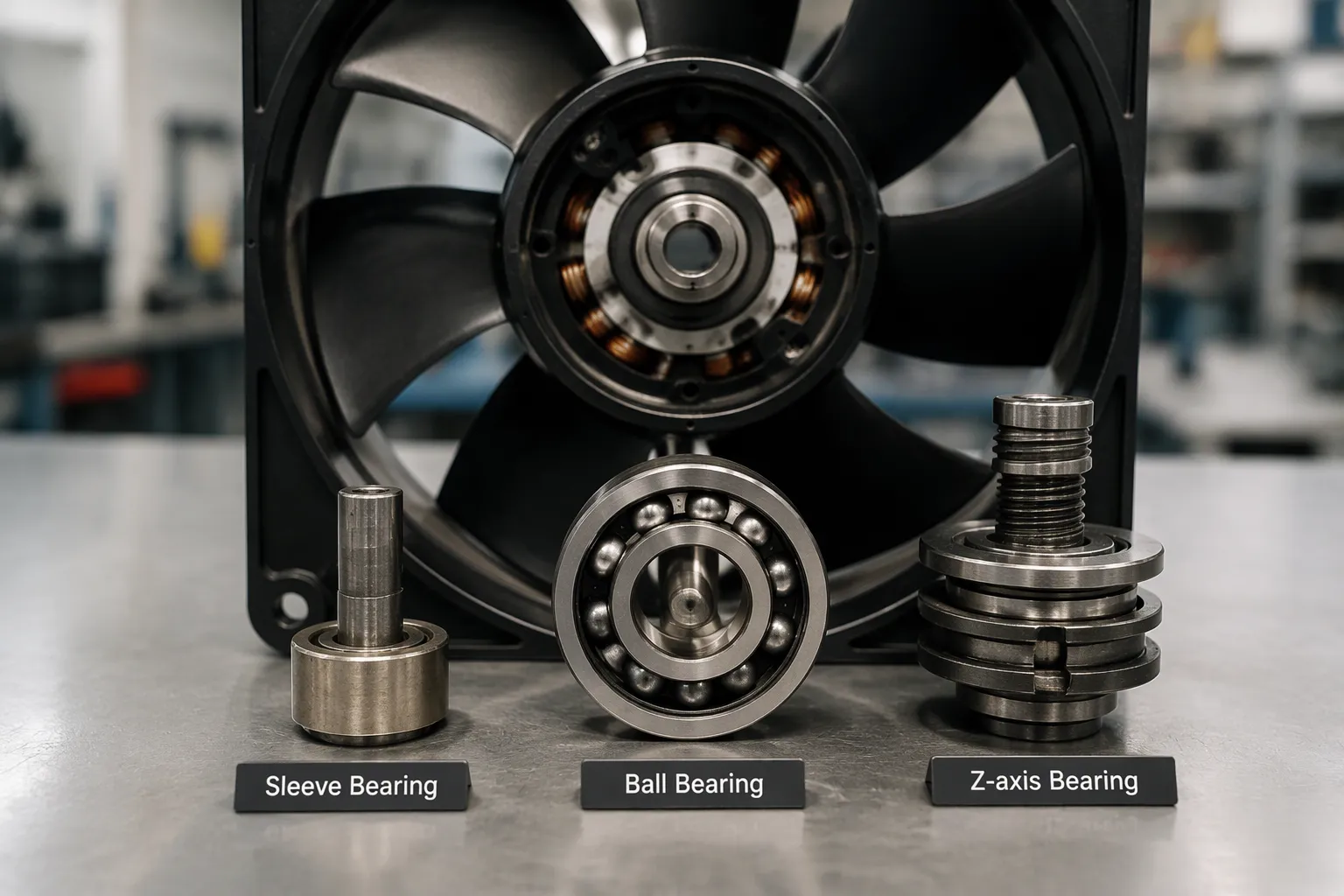
Sleeve Bearing Basics
A sleeve bearing is the simplest design in the group. A lubricated sleeve wraps the shaft, and the shaft turns inside a thin film of oil. Fewer parts mean a lower unit price. The design also runs quietly when it is new, because the oil film absorbs small vibrations.
Sleeve bearings fit budget equipment and light-duty cycles. A fan that runs a few hours a day in a clean, cool cabinet suits this type well. Typical life sits near 20,000 hours at 25°C. Noise starts low and rises as the oil film thins and clearance grows. Cost is the lowest of the three types.
The common failure mode deserves attention. In demanding conditions, a sleeve bearing can seize after roughly 18 months. Heat dries the lubricant, the film breaks down, and metal contacts metal. Dust and shaft-up mounting speed up that process. Buyers who plan a 24/7 duty cycle in a hot enclosure should treat this limit as a real risk. A generic model such as [SF-series sleeve-bearing axial fan] shows where this type fits best: short cycles, mild temperatures, and easy service access.
Ball and Z-Axis Bearings
A ball bearing carries the shaft on rolling steel balls. Rolling contact cuts friction and holds clearance far longer than a sliding film. This type fits general HVAC, refrigeration, and continuous industrial duty. Life reaches about 40,000 hours at 25°C in medium light-industrial use. Noise stays moderate and steady across the whole service period, with no late-life rattle. Unit price sits in the middle. A model such as [BF-series ball-bearing axial fan] represents the balanced middle ground for most plant installations.
A Z-axis bearing targets the top of the range. The design holds the shaft on two axes and resists tilt under load. Long-life versions reach up to about 180,000 hours at 25°C. Noise stays low and stable, which suits noise-sensitive rooms. Cost is the highest of the three. This type fits telecom cabinets, server racks, and systems where a failed fan costs far more than the part. A model such as [ZF-series Z-axis axial fan] shows the long-life end of the range.
Each type fits a different scenario. Sleeve bearings serve budget and light duty. Ball bearings serve the broad middle of industrial work. Z-axis bearings serve high-reliability systems. A buyer who matches the bearing to the duty cycle gets the best value from an Axial Cooling Fan, and a buyer who ignores the match pays in replacements or in overspending.
Choosing the Right Axial Cooling Fan
Matching Application to Bearing
A good choice starts with six inputs: operating temperature, duty cycle, noise tolerance, budget, mounting position, and maintenance access. Each one narrows the bearing choice. A hot cabinet with a 24/7 duty cycle pushes the designer toward a ball or Z-axis bearing. A cool cabinet with short run times leaves room for a sleeve bearing. Noise tolerance decides how much late-life rattle the site can accept. Budget sets the ceiling on unit price. Mounting position matters because shaft-up or shaft-down setups change how the bearing carries load. Maintenance access decides how costly a replacement becomes.
The framework works best when the designer ranks the inputs by importance. A telecom cabinet puts reliability first and accepts a higher unit price. A budget ventilation unit puts cost first and accepts a shorter service interval. Belmont builds axial fans from 200 mm to 910 mm with AC and EC motor options, so the mechanical fit and the electrical supply can be settled alongside the bearing choice. Most models carry IP54 protection, and selected heavy-duty versions reach IP55.
Export Compliance Checklist
OEMs and EPC contractors shipping machinery to the EU or North America face a paperwork risk that can hold up a project. The fan must carry the right declarations before it leaves the factory. A practical checklist covers four items:
CE declaration for the EU market
RoHS declaration for restricted substances
UL or cUL certification number for North America
Compliance reports and factory test reports on file
Buyers should request these documents early and confirm the certificate numbers match the shipped model. A missing declaration can stall customs clearance or force a redesign late in the schedule.
Belmont brings more than 24 years of fan manufacturing experience to this step. The company holds ISO 9001, CE, and UL certifications and supports OEM/ODM work, with standard lead times of 7–15 working days. One Spanish HVAC manufacturer replaced its AC fans with Belmont EC axial fans and cut energy use by 18% while lowering sound levels by 5.7 dB(A), meeting ErP 2022/2026 requirements. That case shows how bearing choice, motor technology, and compliance work together on a single Axial Cooling Fan project.
The bearing type sets how long an industrial Axial Cooling Fan will last. Sleeve, ball, and Z-axis designs each cover a different range of lifetime, noise, and cost. No single option is best in every case. Sleeve bearings work well for light duty and tight budgets. Ball bearings fit general industrial work. Z-axis bearings serve high-reliability systems where a failure costs far more than the part.
Your choice should follow the application load, noise tolerance, budget, and export-market compliance needs. A practical path works best: define the operating environment and certification requirements first, then pick the bearing type and fan model that match. Confirm every specification with the supplier before you order.
FAQ
How long does an industrial axial fan usually last?
Most industrial units run 25,000 to 60,000 hours at 25°C. In the field, they often last between 8 and 15 years. Bearing type, room temperature, mounting position, and how often the fan runs can push that number up or down.
Which bearing type suits a 24/7 duty cycle?
A ball bearing fits most continuous industrial work, with about 40,000 hours at 25°C. A Z-axis bearing suits high-reliability systems such as telecom cabinets. A sleeve bearing fits light duty and short cycles better.
Should buyers trust the MTBF figure on a datasheet?
Treat it as a lab benchmark, not a promise. Test conditions rarely match a real cabinet. Ask the supplier how temperature, mounting, and load affect the rating, then compare that answer with the actual installation.
When should a maintenance team plan a fan replacement?
Plan by duty cycle, not by calendar alone. A sleeve-bearing fan in a hot, nonstop enclosure can seize after roughly 18 months. A ball-bearing unit in mild conditions may serve for years. Track run hours and noise changes as early warning signs.
Which documents should accompany an exported fan?
Request the CE declaration, the RoHS declaration, and the UL or cUL certificate number before shipping. Confirm each certificate matches the shipped model. Belmont holds ISO 9001, CE, and UL certifications and supplies compliance and factory test reports on request.


